The Sewing for Success Project is part of an agency-wide expansion of efforts at Catholic Charities Archdiocese of San Antonio to create sustainable pathways for economic stability and community empowerment. Sewing for Success represents a strategic step integrating skill-building with cooperative business models that generate long-term value. By pairing workforce training with an incubation approach—offering mentorship, shared resources, and cooperative enterprise development—the program equips participants with marketable skills, fosters shared ownership opportunities, and strengthens community networks. These outcomes generate long-term value by promoting financial security, collective economic power, and resilient social structures, reinforcing the agency’s commitment to innovation in social impact programming.
Challenge or Need
Sewing for Success is empowering women, especially Refugee Resettlement Services clients with limited English proficiency and job skills, to learn new job skills specific to sewing and business development. One hundred percent of participants have reported a positive experience, with 98% reporting increased motivation to obtain work and earn their own income, a long-term self-sufficiency win. Through establishing a network of area garment manufacturers, the clients will get industry backing in the development and implementation of standardized training for entry-level laborers. Also, university-backed credentialing will expand continuing education and training opportunities.
Why It’s Innovative
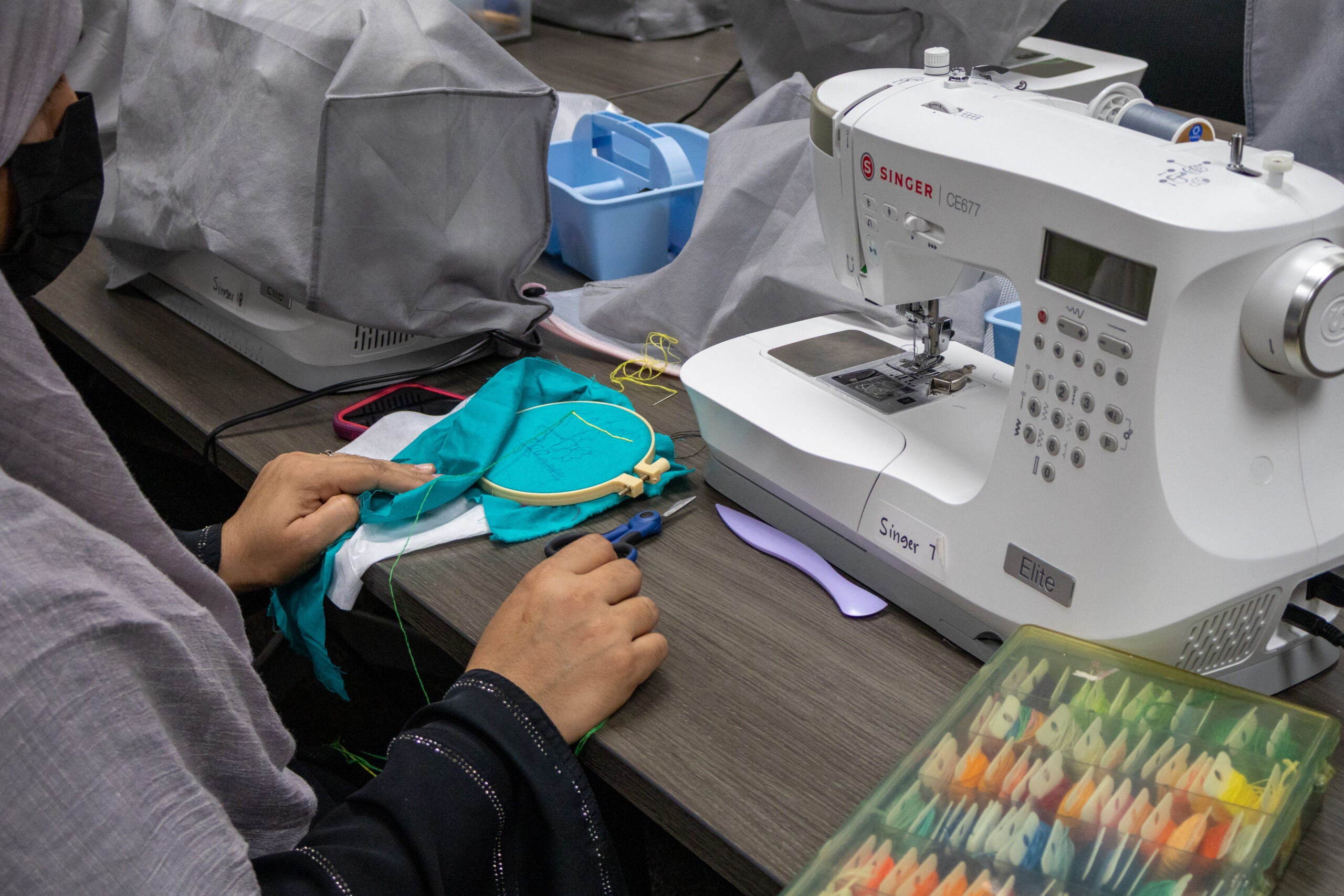
Unlike many sewing and workforce programs that focus solely on technical instruction, Sewing for Success provides participants with comprehensive training that spans the entire product development process, from design, planning, and project development to production, quality control, and workflow management. The program also teaches essential business and entrepreneurship skills, including client/producer interaction, customer communication, pricing strategies, product development, and cooperative business management practices. By combining creative, technical, and business training, the program equips participants with the skills needed for employment, leadership opportunities, self-employment, self-sufficiency, and long-term success in the fashion and design industry.
Program Impact
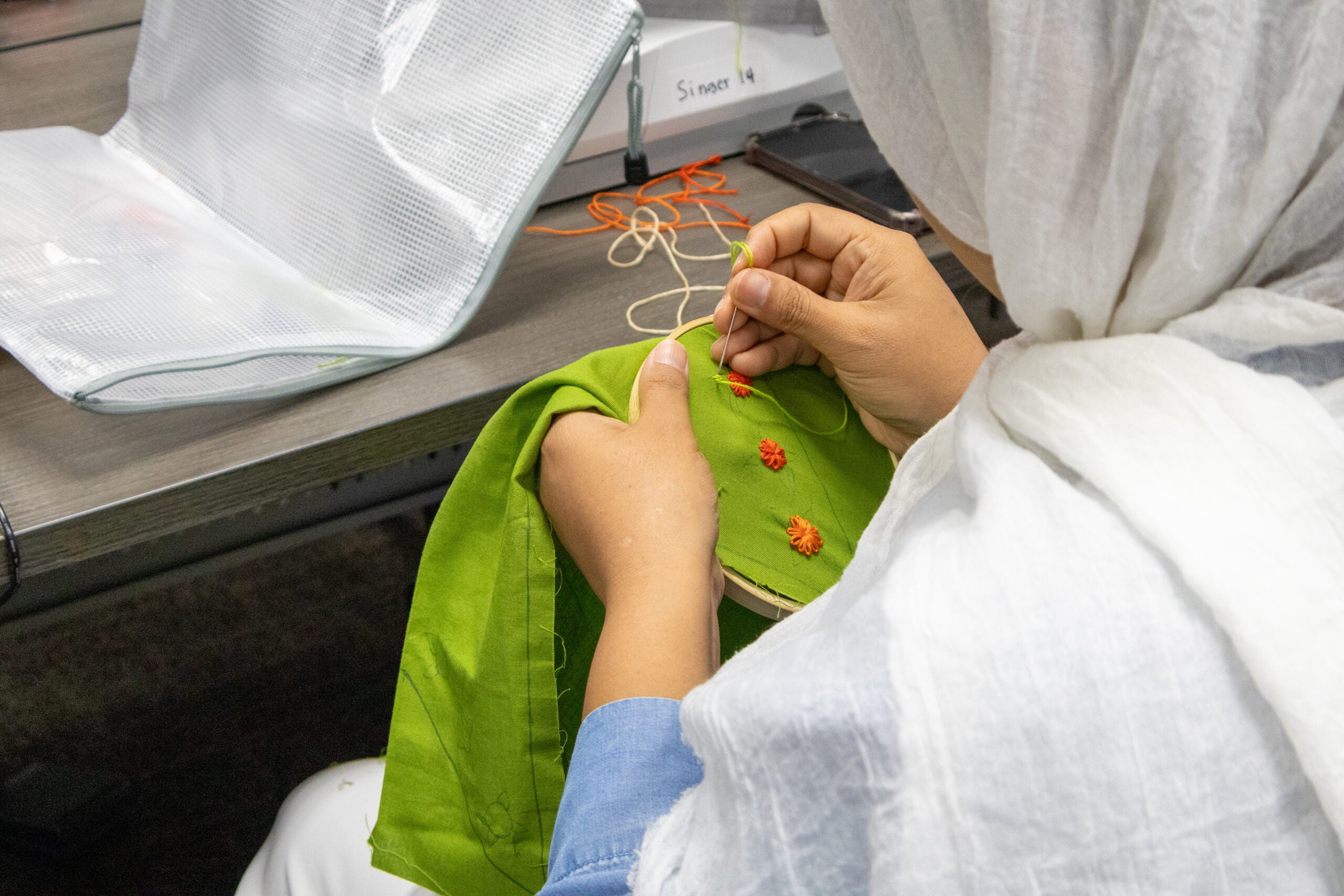
Program staff and clients are innovating new ways to grow their job skill set and personal businesses. Although this program is only one year old, participants have created 244 marketable products that will launch on a website in the coming months. They have even sold their products at agency special event fundraisers, generating awareness and learning business acumen along the way. They sold aprons with unique designs and embroidery at an event and made about $1,200 as a test case for their product appeal. They learn skills that make them competitive employment candidates at local garment and textile businesses including Jon Hart bags and SAS, San Antonio Shoes. Additional partnerships with a local university are providing expert training and guidance for clients learning business and sewing skills.
Lessons Learned
One of the most important lessons we have learned is that innovation requires flexibility, continuous improvement, and a willingness to learn alongside participants. Because Sewing for Success was developed through experimentation rather than from an established model, the program evolved through participant feedback, real-world experience, and ongoing adaptation to local workforce needs. This process reinforced the importance of strong partnerships with area garment producers and the University of the Incarnate Word, whose collaboration helps ensure the project remains industry-relevant while exploring the future development of credentialing opportunities for participants.
We also found that side-by-side learning—where staff, educators, and participants work together to identify challenges, test solutions, and refine processes—builds trust, strengthens participant ownership, and results in a more responsive and sustainable program. For other Catholic Charities agencies, embracing collaboration, maintaining strong community partnerships, and viewing participants as co-creators in program development can create more effective pathways to economic opportunity and long-term success.