St. Charles School
St. Charles School has been serving New Hampshire’s children since 1913. What began as an orphanage led by the Sisters of Mercy later became a residential group home. Today, as a program of Catholic Charities New Hampshire, it is a full-time, licensed, private special education schools for students in grades K-8 whose emotional and behavioral challenges have made it difficult to succeed in traditional classroom settings.
While the programs have evolved over the past century, our mission has remained the same: meeting children where they are and responding to their greatest needs. St. Charles combines individualized academics with therapeutic support in small classrooms, helping students build emotional regulation, healthy relationships, confidence, and academic skills. The goal is not simply to help children succeed in school today, but to prepare them to return to their local schools whenever possible and build a foundation for lifelong success.
Challenge or Need
It can be incredibly difficult—and often impossible—for children with severe emotional and behavioral impairments to grow and thrive in traditional school settings. Many have experienced trauma, anxiety, or other struggles that make it difficult to learn, build friendships, and succeed in school.
Most public school districts are not equipped to provide the level of support these children need. Without specialized services, they can continue to fall behind academically, struggle to connect with others, or begin to believe they simply can’t succeed.
St. Charles School fills that gap.
Rather than seeing behavior as the problem, we focus on what is driving it. We help students understand their emotions and learn healthier ways to cope, solve problems, and build relationships.
Grounded in the Catholic belief that every child has dignity and worth, St. Charles gives students a safe, structured place to rebuild trust, manage their emotions, and connect with others. Success looks like participating in class, forming healthy relationships, handling challenges in positive ways, and, whenever possible, returning to a local public school.
Why It’s Innovative
Since 1913, St. Charles has continually adapted to meet the changing needs of New Hampshire’s children. What began as an orphanage led by the Sisters of Mercy later became a residential group home and today is one of New Hampshire’s few therapeutic special education schools. While the programs have evolved, the mission has remained the same: helping children facing their greatest challenges find hope and a path forward.
Our philosophy shapes every part of the school. St. Charles is the only therapeutic special education school in New Hampshire that does not use physical restraints. Instead, we rely on relationships, de-escalation techniques, and understanding what is driving a child’s behavior. Teachers, behavioral specialists, and staff help students build trust, manage emotions, overcome challenges, and rediscover that they are capable of succeeding.
Families often tell us St. Charles doesn’t feel like a school, it feels like a home. We believe that’s rooted in our Catholic faith and our commitment to treating every child with dignity, compassion, and unconditional respect.
Learning extends far beyond the classroom. Every interaction becomes an opportunity to build relationships, solve conflicts, manage frustration, and ask for help. We believe children learn best when they feel safe, understood, and supported, and that lasting success begins with those everyday moments.
Program Impact
Many students come to St. Charles believing they can’t succeed in school. They leave prepared to take the next step in their education.
Our goal is not simply better grades. We help students develop healthier behaviors, stronger relationships, and the confidence they need to return to their local public schools whenever possible.
Every student’s goals are individualized, so success looks different from child to child. Even so, some results are clear. One hundred percent of our students improve their reading by at least one grade level. Students also make measurable gains in math and science while developing responsibility, trustworthiness, and other life skills.
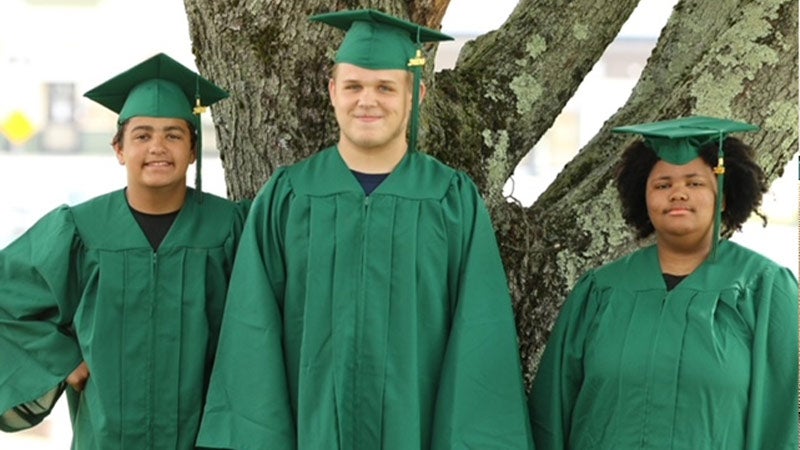
The majority of students transition to traditional school settings or diploma-based educational programs. This past spring, all four eighth-grade students successfully moved on to the next stage of their education. One returned to his local school district, while three enrolled in specialized high schools.
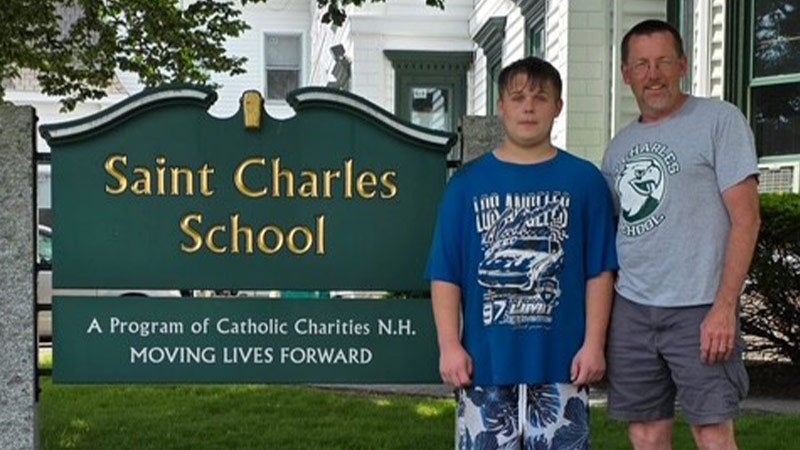
This includes Michael.
He came to St. Charles as a fifth grader reading at a first-grade level after years of struggling in traditional classrooms. With individualized instruction, therapeutic support, and caring staff who believed in him, Michael steadily made remarkable academic progress, even holding several leadership positions at the school.
This spring, he graduated from St. Charles reading at grade level and is preparing to enter high school with plans to become a welder.
His mother shared what the experience meant to their family: “The staff at St. Charles saw us at our worst, struggling emotionally, financially, and personally, and never once judged us. Instead, they quietly stepped in to help. They didn’t just educate my son. They changed the course of his life.”
Lessons Learned
One of the biggest lessons we’ve learned is that behavior is often a symptom, not the problem itself. Understanding what’s driving that behavior changes how adults respond—and often changes the child’s trajectory.
We’ve also learned that children make the greatest progress when families, schools, and support staff are working toward the same goals. When those relationships are strong, children receive the consistency and support they need to succeed.
Finally, we’ve learned that growth doesn’t always begin with academics. Sometimes, success starts with a child asking for help instead of acting out, making a friend, participating in class, or trusting an adult for the first time. Those small victories often become the foundation for much bigger ones.
In the news