The Caritas Family Center has evolved beyond a traditional emergency shelter into a comprehensive, family-centered model designed to help families achieve long-term stability. While housing remains the foundation, the on-site case management team from Catholic Charities of Northwest California and Family Center staff provide individualized support tailored to each family’s unique needs, experiences, and goals. Through intentional partnerships, community organizations regularly bring services, resources, and opportunities directly into the Family Center, making support accessible when families need it most. Parents receive coordinated housing, behavioral health, parenting, and advocacy services, while children benefit from tutoring, Head Start, extracurricular activities, and experiences that help preserve a sense of normalcy during a difficult time. By removing barriers, building trusted relationships, and creating warm handoffs to community partners, families leave with more than permanent housing; they leave with the tools, connections, and confidence to build lasting stability and thrive in their community.
Challenge or Need
Families experiencing homelessness face far more than the loss of housing. Parents are often navigating trauma while trying to secure employment, access healthcare, enroll children in school, coordinate childcare, and rebuild financial stability. At the same time, children are experiencing disruption to their education, friendships, routines, and sense of security. Even when resources exist within the community, families frequently lack the time, transportation, or capacity to navigate multiple systems on their own.
The Caritas Family Center was designed to address these barriers by shifting our focus from simply providing shelter to building long-term family stability.
Our on-site case management team and Family Center staff work alongside each family to understand their unique needs and connect them to the right support at the right time. Through strong partnerships, community organizations regularly bring services, resources, and opportunities directly into the Family Center, making it easier for families to access behavioral health, parenting support, educational advocacy, youth enrichment, health care, and other critical services.
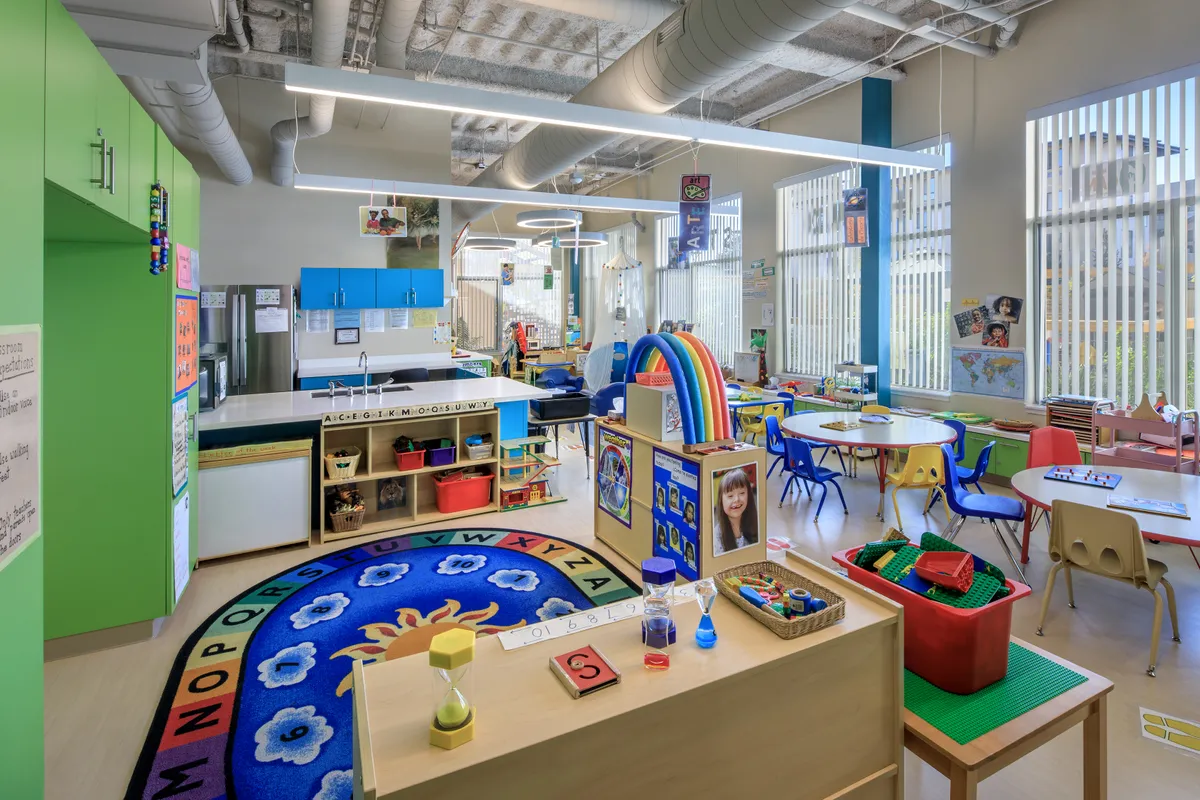
We also recognize that helping a child maintain a sense of normalcy is essential to a family’s long-term success. By supporting children’s education, development, and well-being alongside parents’ housing goals, we help families leave with more than permanent housing. They leave with stronger support systems, greater confidence, and lasting connections within their community.

Why It’s Innovative
Our innovation is not a single program, but a different way of supporting families experiencing homelessness.
Traditional shelter models often focus on helping families secure housing. While permanent housing remains our primary goal, we recognize that lasting stability depends on much more. The Caritas Family Center was intentionally designed to support the whole family by addressing the barriers that can affect a family’s success long after they leave the shelter.
Our on-site case management team and Family Center staff proactively identify each family’s unique needs and connect them with individualized support. Rather than relying on traditional referrals, we regularly invite community partners into the Family Center so families can meet providers face-to-face before leaving the shelter. Whether connecting with a behavioral health provider, educator, healthcare partner, or another community organization, these warm introductions replace cold phone calls with trusted relationships, making it easier for families to access services and remain engaged after transitioning into permanent housing.
We also believe children deserve more than stability—they deserve the opportunity to simply be kids. Through partnerships with organizations like the Luther Burbank Center for the Arts, Child Parent Institute, Santa Rosa Community Health, local schools, and many others, children access behavioral and educational support, enrichment activities, and experiences that help restore a sense of normalcy.
By combining individualized case management, relationship-based partnerships, and a whole-family approach, we’ve transformed the Family Center from a temporary shelter into a bridge connecting families to the people, resources, and community they need to thrive.
Program Impact
Since opening, the Caritas Family Center has transformed how families experiencing homelessness access support and build long-term stability. By combining individualized case management, relationship-based partnerships, and a whole-family approach, families are able to move beyond crisis more quickly while remaining connected to services after leaving the shelter.
As of December 2025, the Family Center had served more than 1,100 family members, including over 650 children. Families are moving into permanent housing in half the time compared to previous models, and 82% of families who exited the program have remained stably housed for at least one year, demonstrating that our approach supports lasting, not just immediate, housing stability. Children continue to access educational opportunities, developmental supports, and community connections that help families build a strong foundation for the future.
The model has also strengthened collaboration across the community. Through intentional partnerships, families meet healthcare providers, educators, behavioral health professionals, and other community organizations before leaving the shelter. These warm introductions replace traditional referrals with trusted relationships, increasing engagement with services and creating stronger support networks after families transition into permanent housing.
This sustained housing stability has contributed to broader community efforts to reduce family homelessness. According to the preliminary 2026 Sonoma County Point-in-Time Count, the number of families experiencing homelessness declined 46%, from 78 families in 2025 to 42 families in 2026, with every family counted residing in sheltered settings. The county also maintained its historic 23% overall reduction in homelessness. While these outcomes reflect the work of many community partners, the Caritas Family Center has played an important role by helping families not only secure housing, but remain successfully housed over time.
Lessons Learned
One of our biggest lessons is that stable housing is the beginning of a family’s journey, not the finish line. Lasting success requires addressing the needs of the entire family, including education, healthcare, behavioral health, parenting support, and opportunities for children to thrive.
We’ve also learned that families shouldn’t have to navigate complex systems on their own. Rather than waiting for families to ask for help, we’ve built a culture that proactively removes barriers. Our staff identify needs early, connect families to the right resources, and create opportunities for community partners to meet families while they are still in shelter. These face-to-face introductions build trust, reduce barriers to accessing services, and make it more likely that families will remain engaged after moving into permanent housing.
Another key lesson is that meaningful collaboration doesn’t require every partner to be housed in the same building. By cultivating strong relationships and regularly bringing community organizations into the Family Center, we’ve created a connected network of support that feels seamless for families while allowing each partner to contribute their unique expertise.
Finally, we’ve seen that investing in children’s stability strengthens the entire family. Helping children remain connected to school, enrichment opportunities, and supportive adults creates a stronger foundation for long-term success and reinforces parents’ progress toward self-sufficiency.
We believe these lessons can be adapted by Catholic Charities agencies of any size. Innovation doesn’t always require creating new programs. Sometimes it means intentionally connecting the strengths that already exist within your community, proactively removing barriers before they become obstacles, and ensuring every family leaves with not only stable housing, but the relationships and support they need to thrive.
In the news
Caritas Family Center: Helping families build brighter futures