Over the past year, Catholic Charities Southwestern Ohio has transformed its Adult ESOL (English for Speakers of Other Languages) program from a small, volunteer-led effort serving 45 students into a comprehensive program serving more than 500 unduplicated learners annually. We introduced mandatory orientation, four instructional levels, a learning management system, and flexible learning options, including morning and evening in-person classes, virtual instruction, and asynchronous learning. We moved to five, eight-week sessions per year, creating more opportunities for enrollment and advancement. We retained volunteers as teaching assistants and mentors, expanded wraparound support through our Su Casa Hispanic Center and Refugee Resettlement teams, and developed partnerships such as La Soupe to address food insecurity. We are also building workforce partnerships and career pathways that connect English language learning to better employment opportunities and long-term economic mobility.
Challenge or Need
Immigrants and refugees often face barriers that make it difficult to consistently attend classes, including changing work schedules, transportation challenges, childcare responsibilities, housing instability, and other life circumstances. Our previous volunteer-led model had limited capacity and could not meet the growing demand for high-quality English language instruction in our community.
At the same time, many English language learners were seeking better jobs and greater economic stability but lacked the language skills and support needed to advance.
We redesigned the program to increase access, flexibility, and student success. We created multiple learning options, expanded class availability, implemented structured instructional levels, and developed stronger systems for tracking progress and supporting students.
Most importantly, we recognized that language learning is only one piece of the puzzle. Students often need additional support to overcome barriers that can interrupt their education. By connecting Adult ESOL 1 participants to wraparound services, workforce opportunities, food assistance, and community resources, we created a model that helps students succeed, both inside and outside the classroom.
Why It’s Innovative
What makes our program unique is that we did not simply grow an ESOL program, we reimagined it. In less than a year, we expanded from serving 45 students to more than 500 while creating a flexible, student-centered model designed around the reality that “life happens.”
Students can attend in-person, virtual, or asynchronous classes and can take breaks when family, work, or personal responsibilities become overwhelming. Rather than viewing these interruptions as failures, we encourage students to return when they are ready, knowing we will be there to support them.
Our teachers build strong relationships with students and often serve as trusted connectors to services and resources. When students stop attending, we proactively reach out to identify barriers and connect them to support through our Su Casa Hispanic Center or Refugee Resettlement team.
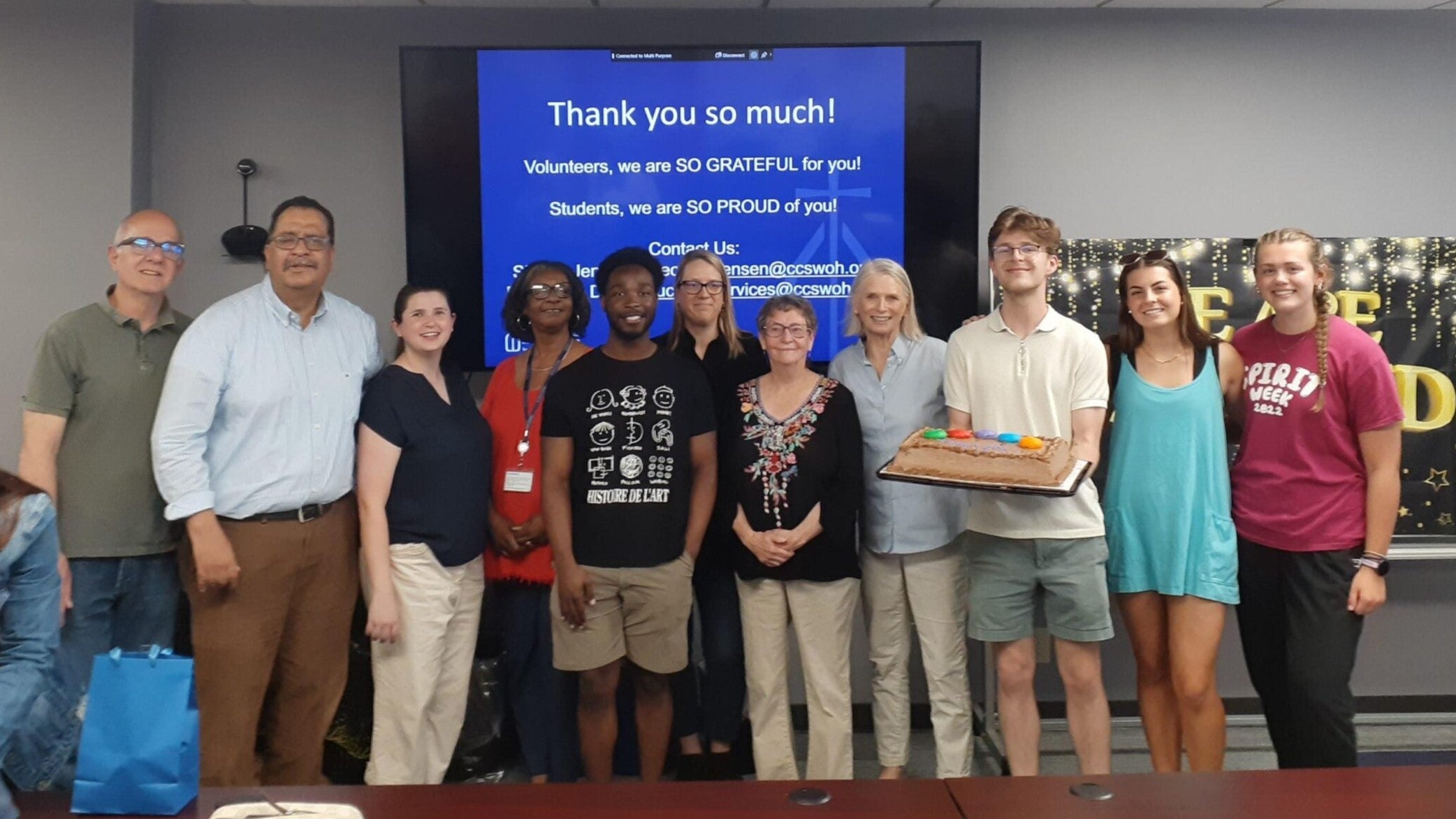
We also intentionally retained volunteers as teaching assistants and mentors, preserving the personal connections that helped make the program successful. Through a partnership with La Soupe, volunteers prepare rescued food that is shared with students during breaks and taken home to families.
The result is an integrated model that combines education, workforce development, volunteer engagement, food support, and wraparound services in one coordinated approach.
Program Impact
- Increased annual, unduplicated enrollment from 45 students to more than 500 learners in less than one year.
- Implemented four instructional levels, mandatory orientation, and a learning management system.
- Expanded access through morning, evening, virtual, and asynchronous learning options.
- Transitioned to five, eight-week sessions annually, increasing opportunities for enrollment and advancement.
- Exceeded national benchmarks for both attendance and post-testing, achieving a 77% attendance rate compared to the national average of 75%, and a 79% post-test rate compared to the national average of 60%.
- Maintained strong volunteer engagement through teaching assistant and mentoring roles.
- Established workforce partnerships and began developing career pathways that connect students to better-paying jobs.
- Connected students to wraparound services through Su Casa and Refugee Resettlement programs.
- Addressed food insecurity through a partnership with La Soupe, providing meals and take-home food for students and families.
Lessons Learned
Our biggest lesson is that student success increases when programs are built around flexibility, relationships, and whole-person support.
Life happens. Students may need to step away because of work, family responsibilities, health concerns, or other challenges. Instead of viewing this as failure, we created a culture where students know they are welcome to return when they are ready.
We also learned that volunteers remain essential even as programs grow. By shifting volunteers into teaching assistant and mentoring roles, we strengthened student support while maintaining the personal connections that are central to our mission.
Finally, we learned that ESOL can be much more than a language program. When education is combined with workforce development, food assistance, and immediate access to wraparound services, it becomes a powerful pathway to economic mobility, family stability, and community integration.
We are excited to share a model that grew by more than 1,000% in less than a year while improving outcomes and supporting the whole person. We believe this approach can be adapted by Catholic Charities agencies of all sizes to better serve immigrant and refugee communities.