Rancho Cordova Food Locker has transformed its traditional food pantry into the Rancho Cordova Community Food Hub, a purpose-built, grocery-store food access center designed around dignity, choice, hospitality, and belonging. The nonprofit operates under the umbrella of Catholic Charities of Sacramento.
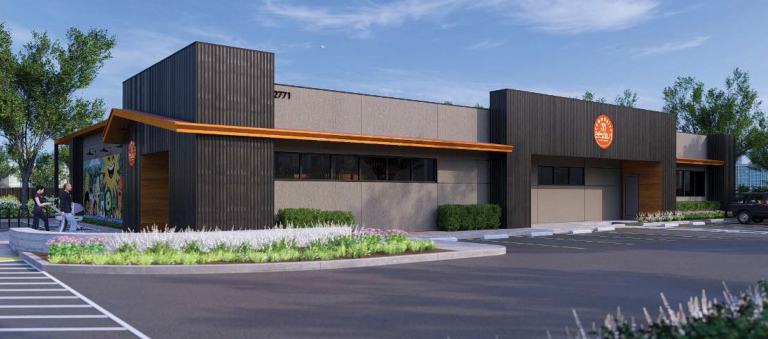
Rather than receiving a predetermined bag or selecting from a limited pantry shelf, guests will enter a welcoming neighborhood market, use shopping carts, and choose from fresh produce, dairy, proteins, shelf-stable groceries, and culturally familiar foods based on their household needs. The approximately 7,000-square-foot facility includes a retail-style grocery store, warehouse, commercial refrigeration and freezer capacity, volunteer workspaces, and areas for supportive community services.
The Community Food Hub also connects food recovery, inventory management, volunteer engagement, nutrition education, diapers and essential supplies, and community partnerships within one coordinated model. It is designed not simply to distribute more food, but to fundamentally reimagine how neighbors experience food assistance, replacing an institutional process with familiarity, autonomy, and dignity.
Challenge or Need
The Community Food Hub was created in response to both a dramatic increase in food insecurity and the limitations of the traditional food pantry model.
When Rancho Cordova Food Locker hired its first executive director in 2022, approximately 240 families received food each week. By 2025–2026, demand had grown to approximately 1,500 families per week, more than six times the earlier volume. Our former parish-based facility was not designed to safely receive, store, sort, and distribute food at that scale. Limited refrigeration, warehouse space, parking, and shopping capacity constrained our ability to respond efficiently.
The traditional distribution model also provided limited choice. Families often received prepacked food without the opportunity to consider dietary restrictions, cultural preferences, available cooking equipment, or what they already had at home. Although the food was provided with care, the process could feel transactional and sometimes resulted in unwanted food and unnecessary waste.
At the same time, our edible-food-recovery program grew rapidly, creating access to substantial quantities of fresh produce, dairy, proteins, and other nutritious foods that required greater refrigeration, transportation, inventory control, and volunteer capacity.
The Community Food Hub was designed to address these challenges together. It expands the physical and operational capacity needed to serve a growing population while creating a more dignified guest experience. It allows families to choose foods they will use, improves the stewardship of recovered food, supports culturally responsive service, and creates a welcoming place where food assistance can become an entry point to relationships, resources, and greater community connection.
Why It’s Innovative
Client-choice pantries are an important and growing practice throughout the Catholic Charities network. Our innovation is taking that principle further by designing the entire facility, operating system, and guest experience around a true grocery-store model.
For families already facing the stress of food insecurity, asking for help can feel unfamiliar, exposing, or stigmatizing. The Community Food Hub is intended to normalize that experience. Guests enter a welcoming neighborhood market, use shopping carts, and select food from stocked grocery shelves, open-air produce displays, and refrigerated and frozen sections—just as they would in any grocery store.
This approach reflects the Catholic Charities commitment to honoring the dignity of every person. Guests are not treated as recipients of a predetermined box or bag, but as individuals and parents who know what their households need. Choice allows families to consider culture, dietary needs, health conditions, cooking ability, and personal preference while reducing unwanted food distribution and waste.
The innovation is both operational and relational. The Community Food Hub integrates food recovery, warehouse and inventory systems, food safety, retail-style stocking, volunteer engagement, nutrition education, diapers, household essentials, and connections to additional services. At the same time, it creates a setting grounded in hospitality, respect, autonomy, and belonging.
The Community Food Hub demonstrates that serving more people efficiently does not require an institutional experience. By designing every detail around the person being served, we are creating a model in which dignity is not an added feature, it is the foundation.
Program Impact
The Community Food Hub’s full grocery operation opened to guests on August 19, 2026, and the initiative has already transformed our organization’s capacity, partnerships, and approach to food access.
The project was developed in response to growth from approximately 240 families served each week in 2022 to approximately 1,500 families per week in 2025–2026. The new, approximately 7,000-square-foot facility provides the warehouse, retail, refrigeration, freezer, food-recovery, and volunteer infrastructure needed to serve this increased demand more safely and efficiently.
The Community Food Hub includes a 15-by-30-foot walk-in refrigeration system, additional freezer capacity, open-air produce refrigeration, retail-style shelving, and dedicated receiving and staging areas. These improvements allow us to accept, safely store, and distribute a greater variety of fresh and perishable foods while reducing the risk that recovered food will be lost because of inadequate space or refrigeration.
Our edible-food-recovery program has grown from 88,782 pounds in 2022 to more than 1.6 million pounds recovered in 2026, demonstrating the need for a facility that can steward food at a significantly larger scale.
The initiative has also strengthened community ownership. More than 300 people attended the Community Food Hub’s ribbon cutting, and local government, businesses, foundations, construction and design partners, volunteers, donors, and community organizations contributed to making the project possible.
Now that it is fully operational, we will measure guest satisfaction, food choice, wait times, pounds distributed and recovered, household reach, food waste, volunteer engagement, cost per person served, and connections to additional resources. These measures will help us evaluate both operational performance and whether guests experience greater dignity, welcome, and autonomy.
Lessons Learned
Our most important lesson is that transforming food access requires more than placing food on shelves and allowing guests to choose. A successful grocery model requires the facility, product flow, staffing, technology, volunteer roles, food-safety procedures, and organizational culture to be designed around choice from the beginning.
We also learned to begin with the guest experience. Decisions about entrances, check-in, signage, shopping carts, shelving, refrigeration, product limits, language access, and checkout should be considered from the perspective of a family entering the space. Dignity is created through hundreds of operational details.
A second lesson is to involve frontline staff, volunteers, guests, food-recovery drivers, warehouse personnel, and community partners early. Each group sees different challenges. Their input helps ensure the model is welcoming but also practical, safe, and sustainable.
Third, food recovery and guest choice must be supported by strong inventory management. Greater variety creates more opportunity for families, but it also requires clear receiving, weighing, sorting, dating, storage, stocking, and reporting procedures.
We have also learned that growth should not be measured only by pounds of food distributed. Agencies should track efficiency and volume, but also food utilization, guest satisfaction, cultural responsiveness, wait times, volunteer effectiveness, and whether people feel welcomed and respected.
Finally, community partnerships are essential. Our facility was made possible through collaboration with government, Catholic Charities partners, food donors, foundations, businesses, volunteers, architects, contractors, and community members. Innovation does not require one organization to do everything; it requires a shared vision, clearly defined roles, and the willingness to build something together.
In the news