Healthy Urban Growing & Sharing (HUGS) Program
The Healthy Urban Growing & Sharing (HUGS) Program is a new initiative by Catholic Charities Hawaiʻi (CCH) that installs aeroponic tower gardens across five housing and service sites on Oʻahu. These vertical gardens enable vulnerable populations, including families experiencing homelessness, youth with mental health needs, and seniors, to grow fresh, nutritious produce in urban environments with limited space. The program combines food production with hands-on education in nutrition, sustainability, and life skills, while incorporating horticultural therapy and community-building activities. HUGS also engages CCH staff through team-based tower gardening, promoting wellness, connection, and supplemental access to fresh vegetables. By integrating food access, education, and well-being, HUGS creates a sustainable, community-centered model that strengthens both residents and staff.
Challenge or Need
Hawaiʻi faces significant food insecurity challenges driven by its geographic isolation and heavy reliance on imported food. Approximately 85–90% of the state’s food is shipped from outside Hawaiʻi, rendering access to fresh, affordable produce vulnerable to supply chain disruptions, high transportation costs, and environmental impacts. This reality disproportionately affects low-income households, including many of the individuals and families served by Catholic Charities Hawaiʻi who are experiencing homelessness, seniors on fixed incomes, and youth facing instability.
At the same time, many of CCH’s housing and service sites are located in dense urban areas with limited space for traditional agriculture, restricting opportunities for residents to grow their own food or access fresh produce regularly. Additionally, clients often face barriers to healthy eating due to cost, limited availability, and lack of knowledge or resources for food preparation and nutrition.
The HUGS Program was designed to address these intersecting challenges by bringing food production directly to where people live and receive services. By using space-efficient aeroponic tower gardens, the program enables year-round cultivation of fresh vegetables onsite, reducing reliance on imported food while increasing access to healthy options. At the same time, it provides participants with practical skills, improves food security, and supports mental health and community connection through shared, hands-on experiences.
Why It’s Innovative
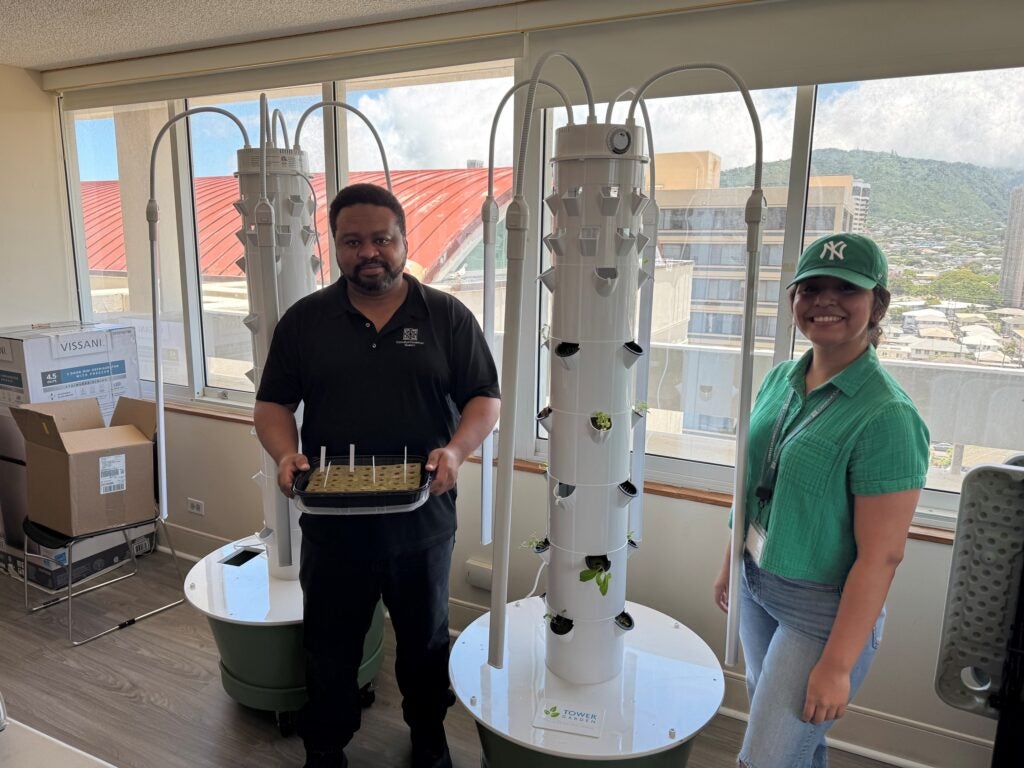
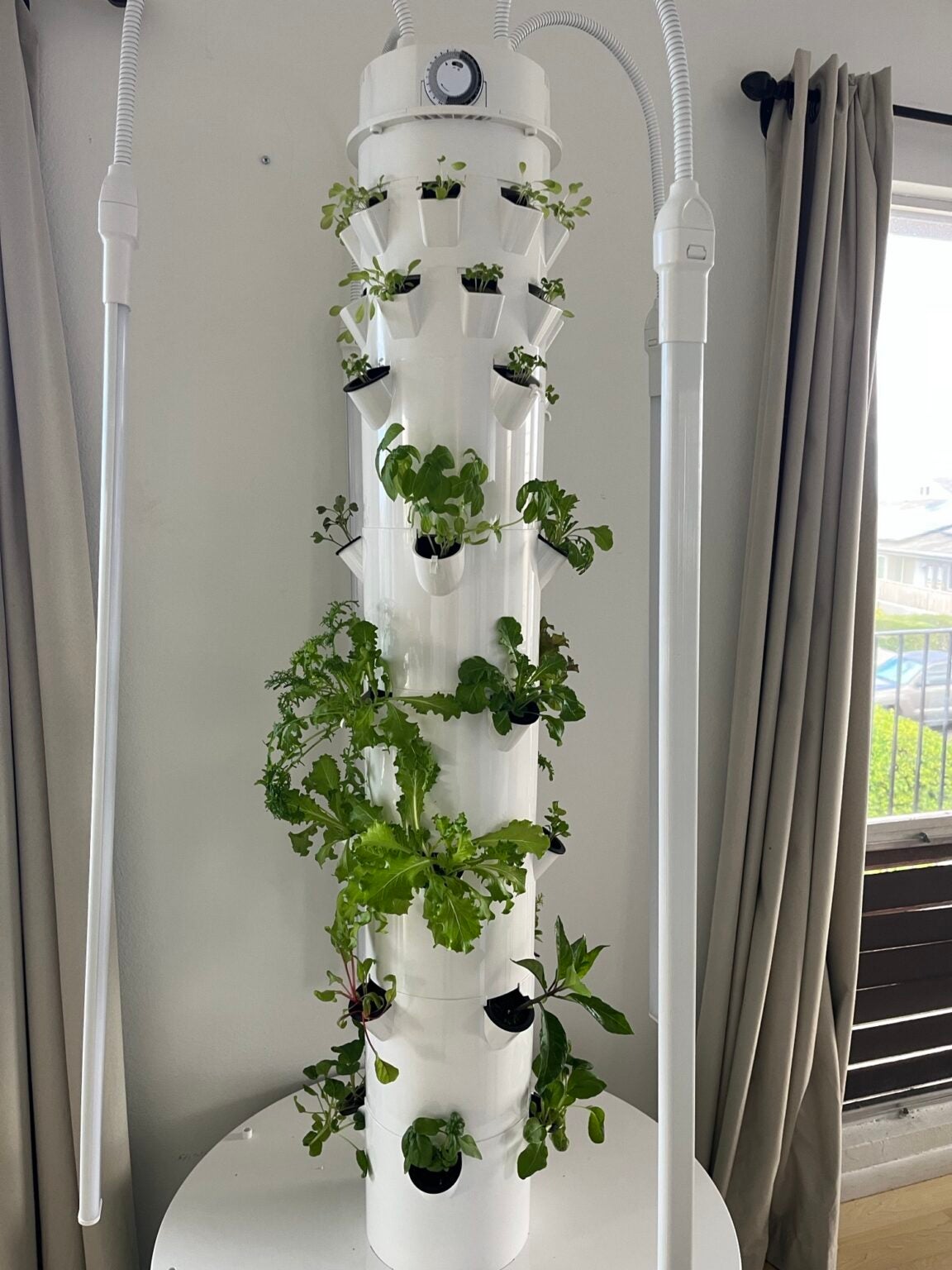
The HUGS Program is innovative because it integrates cutting-edge urban agriculture technology with holistic social services in a way that is both scalable and deeply community-centered. While community gardens are not new, HUGS leverages vertical aeroponic tower systems whose soil-free growing technology uses significantly less water and space to bring food production into dense urban housing and service environments where traditional gardening is not feasible.
What sets HUGS apart is its multi-dimensional approach. The program is not just about growing food; it combines food production with workforce development, nutrition education, horticultural therapy, and community engagement. Each site trains a staff to sustain the program, creating internal capacity and long-term resilience. Participants learn from seed to harvest, building practical life skills alongside confidence and social connection.
Additionally, HUGS uniquely extends beyond client services to include CCH staff. By incorporating tower gardening into staff teams, the program promotes employee well-being, fosters cross-program collaboration, and provides access to fresh produce for staff who may also fall within the ALICE (Asset Limited, Income Constrained, Employed) population.
This integration of technology, wellness, and community care, which reaches across both clients and staff, represents a new, adaptable model for Catholic Charities agencies seeking innovative solutions to food insecurity and community health.
Program Impact
The HUGS Program is designed to deliver measurable impacts in food access, education, and community well-being. Across five CCH sites, the program will install approximately 15 aeroponic towers capable of producing up to 1,000 pounds of fresh produce annually, with a first-year target of 500 pounds. This produce will directly benefit individuals through meal programs and distributions, and participants will receive hands-on training in urban agriculture, nutrition, and food preparation.
Beyond food production, HUGS supports improved mental health, confidence, and community engagement through horticultural therapy and collaborative activities. Participants gain valuable skills and experience a greater sense of belonging and purpose.
A secondary but equally important impact is internal to CCH. Tower gardens are being adopted across staff teams, creating opportunities for team building, stress reduction, and wellness. Staff collaborate across programs to maintain the towers, strengthening relationships and workplace culture. Additionally, fresh produce from staff-managed towers helps supplement food access for employees, many of whom are part of the ALICE population and may face their own food security challenges.
Together, these outcomes demonstrate a holistic impact: increasing access to healthy food, strengthening life skills, improving well-being, and fostering a stronger, more connected community.
Lessons Learned
One lesson is the importance of embedding programs within existing services. By situating tower gardens at housing and service sites, HUGS ensures consistent participation and maximizes impact without requiring clients to travel elsewhere. This approach also strengthens trust and engagement.
We also learned the value of designing programs that serve both clients and staff. Including employees in the initiative not only improves staff well-being and retention, but also models healthy behaviors and deepens organizational culture.
Finally, starting small but planning for scalability is essential. Piloting across five sites allows for adaptation and learning while creating a replicable model that can be expanded to additional locations or other Catholic Charities agencies.
These lessons highlight that innovation is not just about new ideas—it is about creating sustainable, inclusive solutions that strengthen entire communities.