Older adults across 20 counties in Southern Minnesota are welcomed into free, evidence-based exercise programs that help them stay active, healthy, and connected.
This initiative is made possible through an AmeriCorps Seniors Retired Senior Volunteer Program (RSVP) grant, facilitated by Active Aging Programs at Catholic Charities of Southern Minnesota.
Specifics include:
- Approximately 200 volunteers are trained and supported to lead classes, primarily in rural communities.
- Exercise equipment is purchased through grants and donations.
- Classes are held in a variety of local spaces provided free of charge by community partners.
- By working with local hosts and volunteers, the program positions Catholic Charities not only as a service provider, but also as a community connector.
Rural exercise programs do more than improve physical health, they reduce social isolation, enhance emotional well-being, build community connections, increase confidence and independence, and help older adults remain engaged, purposeful, and connected to their communities.
Challenge or Need
Falls are one of the leading causes of injury among older adults. Exercise programs that include balance, strength, and flexibility training can significantly reduce fall risk and help seniors remain safely in their own homes longer.
The number of adults age 65 and older continues to increase in this country as Baby Boomers age and are projected to live longer lives. This increases the numbers of those at risk for falls, and means more people need opportunities to stay healthy, independent, and engaged throughout their later years. Federal studies report that fewer than one-third of Americans age 65 and older meet recommended physical activity guidelines. This gap highlights the need for accessible, welcoming exercise programs.
In rural communities, this need is even greater. Rural older adults often face a lack of fitness facilities and classes near their homes. They may have challenges with transportation, or may not want to travel far from home. This is especially true during the winter months in Minnesota.
Small town America, and the seniors who live there, thrive and survive through social connections. Offering engaging activities such as exercise helps to reduce loneliness and isolation, improve mood and emotional well-being, instills a sense of value, and provides a more positive outlook.
Why It’s Innovative
This initiative uses an innovative, peer-led model that trains older adults to lead evidence-based exercise classes for their community. By leveraging the skills, experience, and leadership of older adult volunteers, the program creates a sustainable, low-cost approach to promoting physical activity, reducing social isolation, and improving health outcomes. The model transforms older adults from service recipients into community wellness leaders, expanding access to fitness opportunities while strengthening social connections and community engagement.
Our need for no-cost space requires a creative approach. We want a clear message that classes are open to anyone, and a location is part of that messaging. In some rural areas, programs sponsored by Catholic Charities and held in a Catholic church might feel limiting, but a local community center feels more inclusive. Sites are selected based on size, availability, accessibility, and local willingness to host. Partners include senior centers, community centers, churches, and senior living facilities.
In Le Center, Minnesota, a town of 2,500, the local ambulance service offered its building. Twice weekly, the ambulance is moved out of its parking bay so adults can exercise there. When the Diocese of Winona-Rochester was faced with downsizing in Winona, it gifted the use of a decommissioned church building to Catholic Charities. The former sanctuary space is now filled five days a week with additional classes using the lower-level community room. Together, these partnerships keep underused spaces active while giving older adults welcoming places to move, connect, and build community.
Program Impact
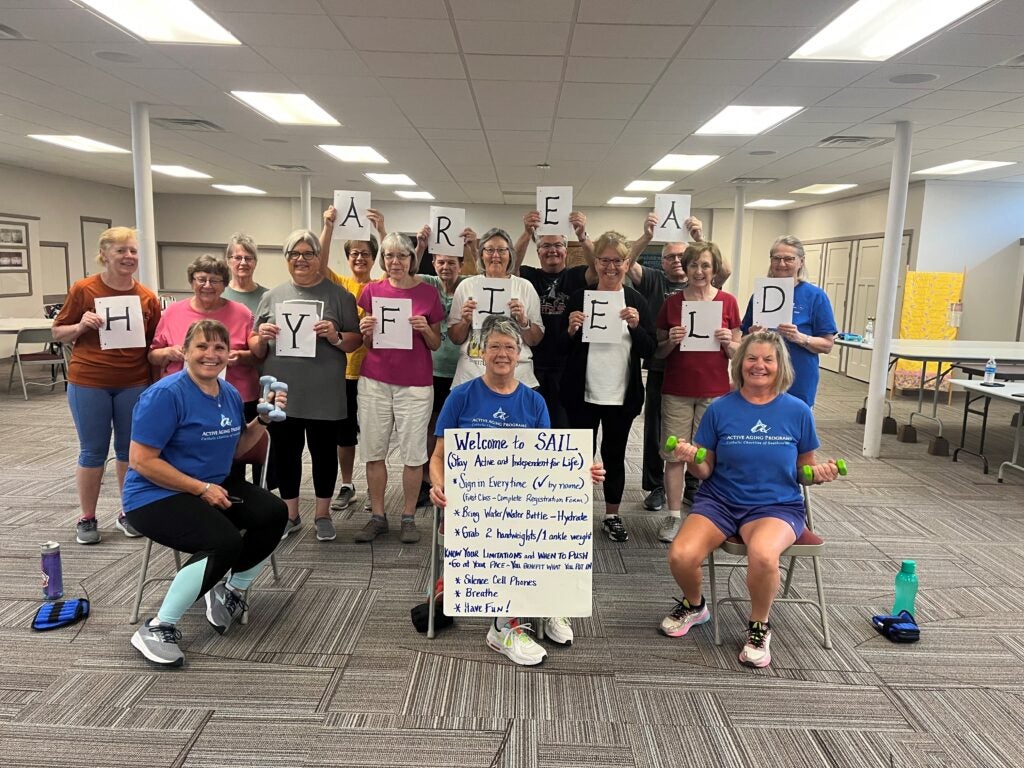
The lives of those participating in senior exercise programs are impacted far beyond the obvious physical health. They report reduced social isolation, enhanced emotional well-being, increased social connections, a boost in confidence and independence, and generally more engagement. Our impact has grown to include 45 communities in 20 counties. Six of these locations are in towns with populations below 1,000. The smallest is in Canton, population 313, where class is held three days a week and regular attendance is around 15. They start the coffee pot before they exercise and spend time after class sipping and visiting. Names of kids, grandkids and even great grandchildren are known by all, along with their accomplishments, heartaches, and latest antics. This time of sharing is just as vital as the weight-bearing exercises and may be the only interaction some of the participants have during the week.
From a survey we conducted a few years ago to which nearly 600 participants responded:
- 88% felt less lonely by attending classes.
- 65% noticed an improvement in balance.
- 20% have seen improvement in bone density.
- 65% reported increased stamina.
Many participants share that exercising before surgery helped make recovery easier. Just as important, their classmates supported them with cards, encouragement, and practical assistance while they recuperated.
Participants often describe the class as family: they rally when someone is ill, offer comfort after the loss of a loved one, celebrate birthdays, and support one another in countless ways. Participants do not keep this experience to themselves. They tell friends, neighbors, and family members, encouraging them to join. They also tell their health care providers, who in turn recommend the classes to their patients.
The goodwill generated in class extends beyond the program and supports other Catholic Charities services. Children and Family Services has benefited when classes organized diaper drives and raised funds to purchase car seats for families in need. Participants have also donated money and supplies for emergency day and overnight shelters and volunteered to prepare meals for shelter guests.
While many testimonials could describe the life-changing impact of these exercise programs, the greatest impact may be the connection created between Catholic Charities and the communities where classes take place. The program’s reach extends beyond participants and class locations into neighborhoods and towns, creating ongoing opportunities to expand our mission.
Lessons Learned
When focusing on services for older adults, look beyond the most obvious supports, such as transportation and chore services. These services are valuable, but programs that help older adults build strength, confidence, and community connections can extend their independence in powerful ways.
Many times, those coming to exercise class grow into volunteers for other services to give back to their community. Some even become great donors! Look outside the churches that may feel comfortable and available to find space where service can happen without what can be perceived as a label. Support may come from places you’d least expect.
Choose evidence-based exercise programs. They have established, proven exercises and the materials needed to support your program. Look closely at what is needed, not only to get started but also to maintain the classes. This is also important if you are choosing to seek funding to pay for equipment and training
In the news