Bridges to Wellness (BTW) is a peer-led mental health education and support program serving refugee and immigrant communities in Lackawanna and Luzerne counties in Pennsylvania. Developed by Catholic Social Services (CSS) of the Diocese of Scranton, BTW removes barriers to mental health care, including cultural stigma, language isolation, and systemic mistrust, by meeting people within their own communities through peers who share their lived experiences. The program offers peer-led support groups, mental health education, culturally responsive community gatherings, and structured referral pathways to clinical mental health services.
Since launching in June 2025, BTW has reached 161 participants from Afghan, Congolese, Ukrainian, Haitian, Bhutanese/Nepali, and Spanish-speaking communities. BTW does not simply connect people to services; it creates the safety and trust that make engaging with mental health care possible in the first place.
Challenge or Need
Refugees and immigrants carry compounding mental health burdens: trauma from their countries of origin, the stress of displacement and resettlement, grief over lost communities, and the daily difficulty of building a new life in an unfamiliar culture and language. During intake conversations with approximately 80 BTW participants, roughly 80% reported experiencing significant stress as well as uncertainty about how to manage it. Despite this clear need, profound barriers to mental health care remain.
Cultural stigma often renders mental health struggles a source of shame rather than a call for support. Language barriers make clinical settings inaccessible. Fear of discrimination from providers unfamiliar with their experiences keeps people away. And heightened immigration enforcement concerns have added another layer of hesitation about traveling to unfamiliar locations.
The result is widespread silent suffering. Participants described loneliness and isolation, trauma from past experiences, parenting stress within a different cultural environment, and language barriers affecting daily life, yet had no safe, culturally grounded space to process any of it. CSS recognized that traditional clinical referral alone would not reach this population. What was needed first was trust, cultural safety, and community connection. BTW was designed to build those foundations, creating conditions under which refugees and immigrants feel safe enough to acknowledge mental health needs and take steps toward care.
Why It’s Innovative
BTW is innovative in its fundamental design logic: rather than expecting refugees and immigrants to navigate existing mental health systems, it builds mental health support inside the cultural communities themselves.
BTW’s Peer Support Specialists, with lived experience, are immigrants and refugees themselves, not credentialed outsiders trained in cultural competency, but community members whose authority comes from shared experience. A Congolese participant who has never discussed mental health will talk to someone who fled the same region, speaks their language, and sat in the same resettlement office. That is the program’s core theory of change: the most credible voice on navigating mental health as a refugee is someone who has lived it.
BTW has served six distinct communities—Afghan, Congolese, Ukrainian, Haitian, Bhutanese/Nepali, & Spanish-speaking—through programming designed for each community’s cultural norms and relationship to mental health, not a one-size-fits-all approach.
Most programs begin with clinical services and struggle with engagement. BTW deliberately inverts this, using peer connection, creative activities, storytelling, and cultural celebrations to normalize mental health as a topic before introducing clinical pathways.
Creative and expressive methods are used as entry points. Art-making, candle-making, dancing, cultural cooking, and storytelling are not supplementary, they are the vehicle through which participants begin discussing stress, grief, and mental health in ways that direct clinical questioning cannot reach.
Embedded in existing trust, BTW operates through CSS, an agency many clients already know through immigration, legal, and resettlement services. This gives the program a head start that a standalone mental health initiative would take years to build.
Program Impact
Since launching community programming in June 2025, BTW has held 13+ events serving participants from six cultural communities, in partnership with Geisinger Commonwealth School of Medicine, the Greater Scranton YMCA, the University of Scranton, the IHM Sisters, the Ukrainian Church, and community faith spaces.
Of the 161 participants reached in the first year, approximately 80 completed intake conversations. Of those, roughly 80% reported significant stress and uncertainty about how to manage it, confirming the depth of need and participants’ openness to engagement once a trusted space was created.
Participant feedback collected in four languages shows consistent themes: feeling less isolated, forming new friendships, and experiencing hope.
Participant voices include:
- “I finally feel like I have a place where I belong.”
- “Hearing other people’s stories gives me hope.”
- “I feel supported and less alone.”
- “Coming here was the best part of my week.”
One participant described the moment they could speak about their migration story without crying as a sign that healing had begun. A Geisinger medical student volunteer reflected that the program deepened their understanding of how culture, migration, and trauma shape mental health, learning they will carry into clinical practice.
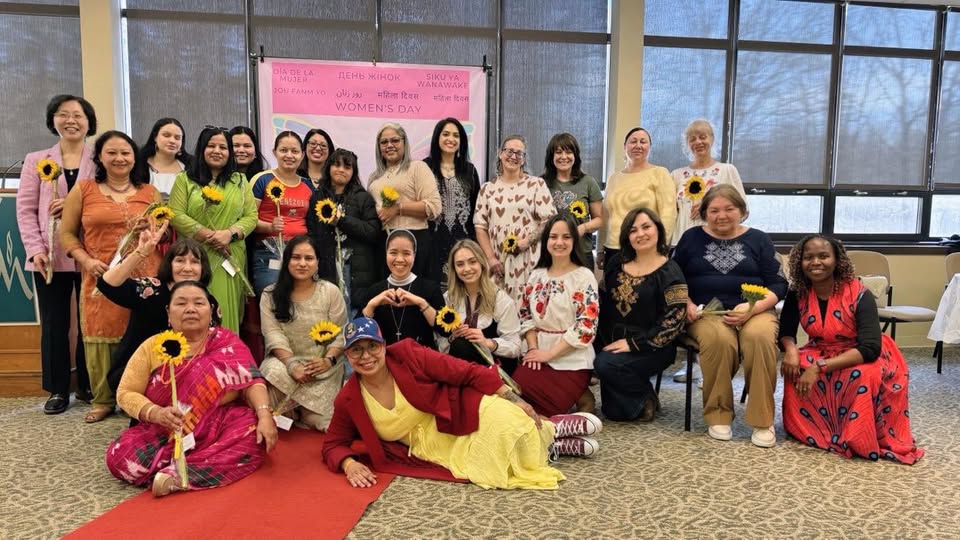
Community gatherings have explored: communication and mental health awareness (Afghan); parenting stress and cultural adjustment (Congolese); grief, loss, and meaning of home (Ukrainian); emotional wellness and stress management (Bhutanese/Nepali); joy, movement, and belonging (Spanish-speaking); and women’s wellbeing and cultural pride (multi-community International Women’s Day).
Lessons Learned
Trust is the core of the program. Participants needed to feel safe before they could engage. Activities that prioritized relationship-building, cultural celebrations, creative expression, shared meals, and storytelling opened conversations that a clinical intake never could. Investing in trust-building is a program outcome in itself, not a precondition to skip.
Peer specialists from the community are irreplaceable. No amount of cultural competency training produces what a peer with shared lived experience provides. BTW’s most powerful moments came from community members hearing their story reflected by someone who had walked the same path.
Flexibility is strength. Weekly programming was adapted to monthly when transportation and immigration enforcement concerns reduced attendance. Hosting events in trusted community spaces, including churches, YMCAs, and medical schools, rather than agency offices, significantly improved engagement. Programs must respond to community realities, not require the community to adapt to the program’s structure.
Creative activities are clinical tools to engage participants. Art, candle-making, dancing, and cooking were the entry points through which participants began discussing stress, loss, and trauma. We do not underestimate experiential and expressive programming as mental health interventions.
Collect feedback in participants’ own languages from the start. Multilingual feedback forms (English, Nepali, Ukrainian, Spanish) produced richer, more honest information than English-only tools would have. It has to be built this way from day one.